Every organization strives to be “data-driven”...until the data disagrees, the definitions don’t match, and decision-making stalls out. Those are the stories we heard time and again over the last six months of High Signal episodes, as we were lucky enough to talk with the brightest data leaders across industries and academia.
These leaders kept circling a core truth: most failures in data and AI don’t come from a lack of models or dashboards. They come from the messy middle: unclear ownership, weak feedback loops, misaligned incentives, and teams that can’t align on what the data means (or what to do about it).
Key takeaways
- Roberto Medri: Failed experiments drain the most resources when you leave them in limbo, instead of sunsetting them quickly based on evidence.
- Anu Bharadwaj: AI agents that survive past the pilot phase are architected for integration into real workflows, not built to impress in demos.
- Paras Doshi: Decentralized data ownership creates multiple conflicting versions of truth, making it impossible for teams to decide with confidence.
- Andrés Bucchi: Experimentation culture takes root through infrastructure investment, portfolio-based risk management, and demonstrating value until it snowballs across the organization.
- Amy Edmondson & Mike Luca: Teams with access to the same data still make poor decisions if they haven't created the conditions for quality debate about what that data means.
- Tomasz Tunguz: Competitive advantage in the AI era belongs to companies that compress the distance between insight and action, making velocity the strategic moat.
- Chris Child: LLMs generate syntactically perfect SQL but need semantic layers to understand business definitions like "revenue" or "customer" well enough to produce trusted insights.
Read on for some of our favorite moments from this year, and subscribe to High Signal so you don’t miss any of the great conversations we have in store for 2026.
Roberto Medri on why great teams ship (and sunset) faster

Key Takeaway: Failed experiments drain the most resources when you leave them in limbo instead of sunsetting them quickly based on evidence.
As the VP of Data Science at Instagram and a product leader who has shaped experimentation cultures at companies like Instacart and Etsy, Roberto Medri brings unusually clear thinking to how teams evaluate ideas and measure impact. In his High Signal episode, he argues that launches are the easy part; they’re fully in the team’s control. The harder question is whether anything changes after the switch flips: do people actually use the thing, and does it create value?
Where teams get stuck, Medri says, isn’t in taking shots but in how they handle the ones that miss. Fear of failure (and the embarrassment that comes with it) can keep ideas alive long after the evidence is telling you otherwise.
“One surefire way to avoid failing is to never try to do something that might fail. But it is okay to ship something, and if it doesn't work out, you sunset it…The real mistake is keeping things in this limbo of testing for months or a year. Very rarely do you get people thinking, ‘I wish I had sunset that product later. I wish I gave it another few months to thrive.’ You often hear the opposite.”
Hear more in Roberto’s full episode.
Anu Bharadwaj on learning from a graveyard of agents
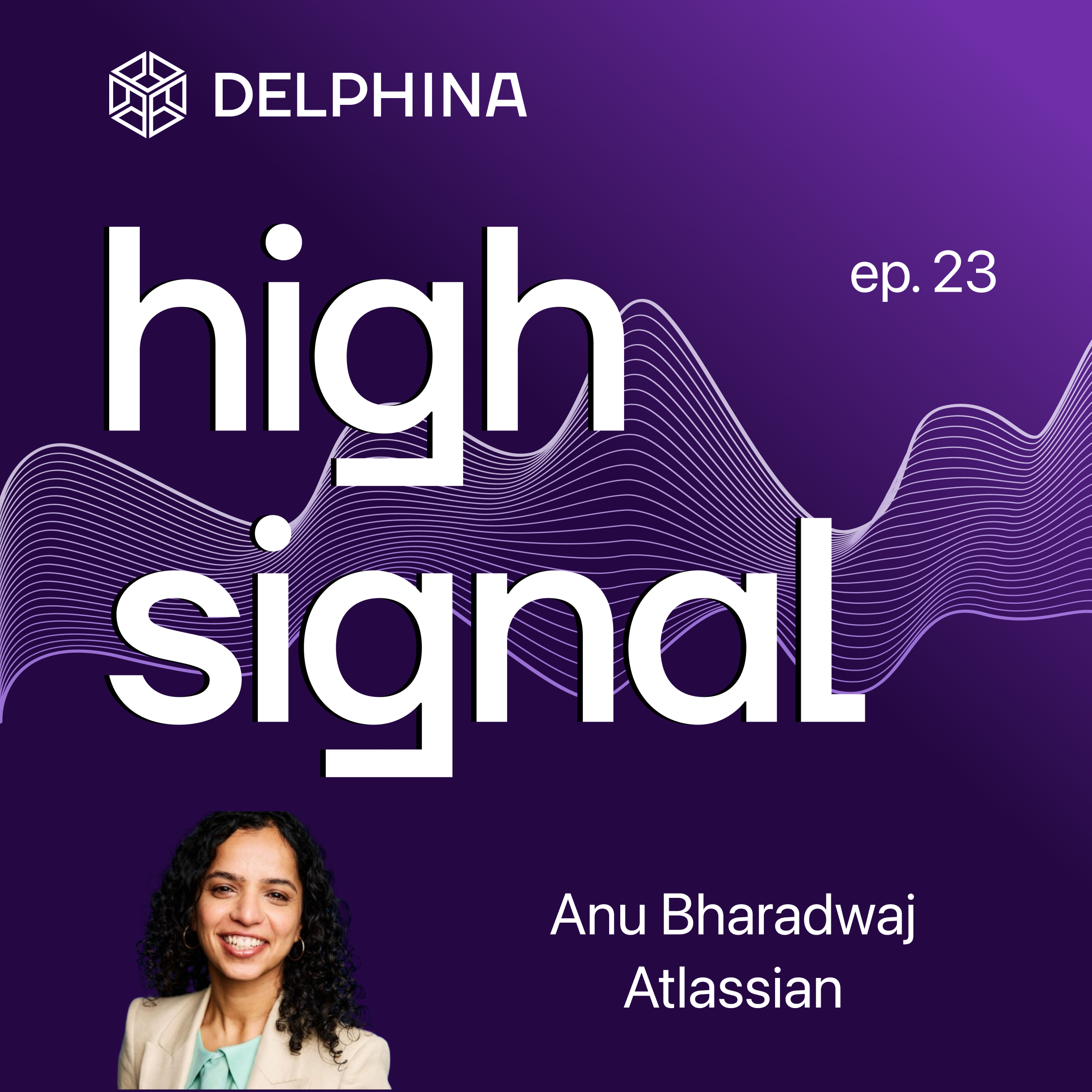
Key Takeaway: AI agents that survive past the pilot phase are architected for integration into real workflows, not built to impress in demos.
As the President of Atlassian, Anu Bharadwaj brings a rare systems-level perspective to how organizations adopt AI. In her High Signal episode, Anu argues that most agents ending up in the graveyard isn’t a sign of failure; it’s exactly what should happen when teams are experimenting at scale. But she also makes it clear that survival isn’t luck. Clever demos don’t win. Agents built for scale do.
The agents that actually escape pilot purgatory are the ones designed from the start to fit into the real system: the workflows, compliance requirements, decision loops, and cross-team handoffs that define how companies actually operate. Teams who architect for integration and durability (not just experimentation) are the ones who end up with the rare agents that materially change how work gets done.
“The more we used the agent, the more we discovered ways in which we can enhance it… and sometimes you also discover cases where they’re not that useful and you’re better off with deterministic automation or doing it manually… Many of them worked very well. Many of them are in the graveyard. It just did not work at all. But we don’t think about that time as wasted. It’s helpful in understanding what is possible and what is not possible.”
Hear more in Anu’s full episode.
Paras Doshi on the advantages of centralized data

Key Takeaway: Decentralized data ownership creates multiple conflicting versions of truth, making it impossible for teams to decide with confidence.
When Paras Doshi joined Opendoor as Head of Data, he found a company that prioritized data but was effectively running on multiple, conflicting versions of reality. Core metrics lived in different tools, owned by different teams, each with their own logic and lineage.
In his High Signal episode, he argues that bringing data talent, tooling, and ownership into a single organization isn’t an operating model preference; it’s the only way to create one shared truth the whole business can use to prioritize, allocate resources, and make decisions with confidence.
“[When I asked different groups] something as simple as ‘How many homes did we acquire last month?’ I had five different numbers. Marketing gave me a number, finance gave me a number: all of them were right for their definitions, but collectively they’re useless because we couldn’t really make any decisions off it.”
Hear more in Paras’s full episode.
Andrés Bucchi on building buy-in for experimentation

Key Takeaway: Experimentation culture takes root through infrastructure investment, portfolio-based risk management, and demonstrating value until it snowballs across the organization.
As Chief Data Officer at LATAM Airlines, Andrés Bucchi inherited a landscape where testing cycles traditionally took months (sometimes nearly a year) because of operational complexity, regulatory constraints, and fragmented decision-making. In his High Signal episode, he explains how LATAM rewired its culture, operating model, and technical foundation to turn experimentation into a competitive advantage.
By investing in infrastructure, adopting a portfolio approach to risk, and teaching teams to make peace with uncertainty, Andrés helped shrink experimentation timelines from months to weeks, unlocking faster learning loops across revenue, operations, pricing, and safety-critical workflows.
“In airlines, operations cost billions of dollars, so just a single-digit-percentage improvement is a lot of money… [but] experimentation was something that was not really common and the value of experimentation wasn’t really understood. So we pushed for this: we created an organization in charge of the program, started building a huge stock of hypotheses… and once people saw that working, it snowballed. Experimentation is only driving more and more value, and adoption is higher and higher.”
Hear more in Andrés’s full episode.
Amy Edmondson & Mike Luca on why better outcomes require better conversations, not more data

Key Takeaway: Teams with access to the same data still make poor decisions if they haven't created the conditions for quality debate about what that data means.
Amy Edmondson, Harvard Business School professor and global expert on team dynamics, and Mike Luca, Johns Hopkins professor and author on decision science, diagnose a fundamental barrier to good decision making: shared data means little if people interpret it differently.
In their High Signal conversation, Amy argues that better outcomes rarely hinge on “more data” alone, but on whether leaders create the conditions for a good argument about that data. In her view, high-stakes decisions go right when teams slow down enough to surface assumptions, expand the option set, and let dissenting perspectives actually reshape the plan.
“I think of a high quality conversation as one in which, first of all, everyone’s engaged… there’s a nice mix of genuine questions that really help people unpack and uncover some of the assumptions they might be making… and finally, if you’re in that conversation, do you feel like you’re making progress? Are we getting somewhere, or are we going around in circles or the loudest voice is winning?”
Hear more in Amy and Mike’s full episode.
Tomasz Tunguz on the value of velocity
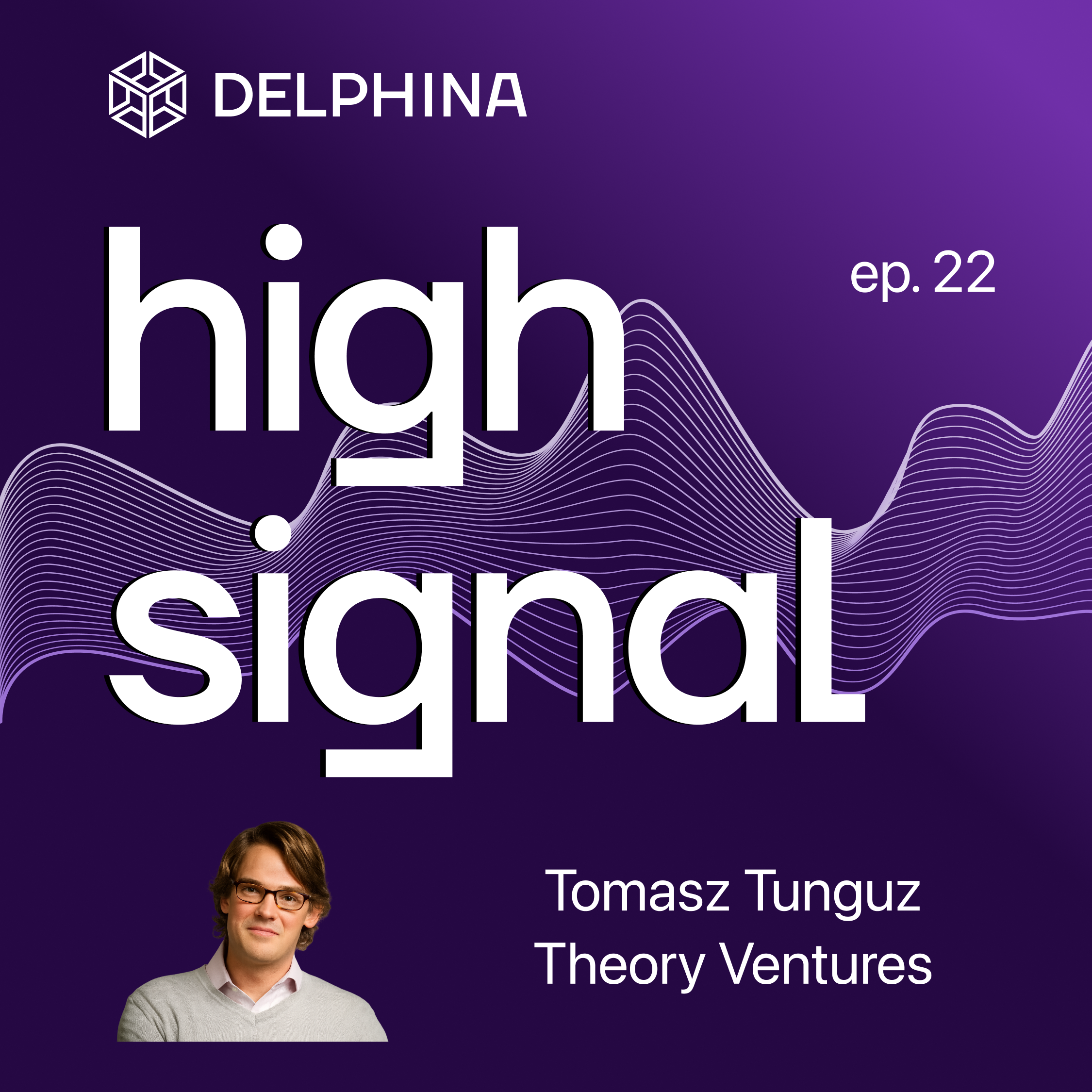
Key Takeaway: Competitive advantage in the AI era belongs to companies that compress the distance between insight and action, making velocity the strategic moat.
Tomasz Tunguz, general partner at Theory Ventures, has backed and advised some of the most successful enterprise and AI-enabled companies of the past decade (including Looker, MotherDuck, Monte Carlo, and Expensify). In his High Signal episode, he makes a strategic case about where real value is migrating in the AI era: not in flashy models, but in the systems that integrate them into fast, reliable decision loops. As AI capabilities commoditize, velocity becomes the strategic moat.
Tomasz reframes competitive advantage around execution: value will concentrate in companies that compress the distance between insight and action. Predictions are cheap; performance at scale is rare — and that’s where market cap gets made.
“We’ve created about one and a half trillion, maybe two trillion in value in software over the last 20 years, and a lot of that is predicated on workflows that were created 20 years ago… Now, as a result of AI and tool calling and all these kinds of things, we can reinvent those workflows in a pretty material way, which is awesome for startups because the legacy companies have calcified their software around those workflows, and it will be extremely difficult for them to move.”
Hear more in Tomasz’s full episode.
Chris Child on why semantic layers are the missing ingredient in enterprise AI

Key Takeaway: LLMs generate syntactically perfect SQL but need semantic layers to understand business definitions like "revenue" or "customer" well enough to produce trusted insights.
Chris Child, VP of Product at Snowflake and one of the architects behind how enterprise teams operationalize AI, argues that the industry has fundamentally misunderstood what today’s models can and cannot do. In his High Signal episode, he breaks down a recurring failure pattern he sees across customers: teams expect LLMs to reason about their business directly from raw data, but models cannot generate meaningful outputs without the semantic context only the organization possesses.
Chris makes the case that the real unlock for enterprise AI isn’t more model tuning or larger datasets, but clearer definitions of business meaning. Models can pattern-match, but they can’t infer logic like “revenue,” “customer,” or “active order” unless someone teaches them. That’s why the semantic layer (long treated as a nice-to-have) becomes an operational requirement in AI-driven workflows.
Without it, the system generates noise. With it, the system can finally produce work the business can trust.
“On the surface, these models look very good. You open up ChatGPT and ask it to write you a SQL query and it spits out syntactically correct SQL. But we found in general that none of these things have an understanding of the business context you’re actually trying to use… We realized ultimately that what was missing was the semantic model — that understanding of what does your company consider a customer to be? When you say revenue, what do you actually mean? There’s no way for a generic model to understand that nuance. You have to provide it with that information.”
Hear more in Chris’s full episode.
Let us know what you think
Join the conversation on LinkedIn, and let us know which data leader you’d love to hear from on High Signal next. Subscribe to High Signal on Apple Podcasts, Spotify, and YouTube to be the first to hear from our upcoming guests.